

Project Workshops
Self-organised learning for students
A project workshop is a module that is organised and supervised by student tutors. They offer students the space to develop projects independently in small groups and promote self-organised learning.
The project workshop can be taken as an elective module.

Project workshop
The aim of the project workshop is for students to practically implement a specific project in the field of socio-ecological transformation and acquire application-oriented skills in the process. They are accompanied by student tutors who are responsible for the progress of the project in terms of both organisation and content, supported by lecturers. This results in tangible project outcomes such as reports or milestones, supplemented by individual self-reflection. Active participation is a prerequisite for the examination.
Theme workshop
The aim of the themed workshop is the theoretical examination of a topic that is underrepresented from a student perspective, whereby a critical, multi-perspective discussion culture is encouraged. The group process is accompanied by professionally and methodologically qualified tutors, with lecturers providing selective support. The results consist primarily of immaterial knowledge transfer, which is made visible via formats such as brochures, blogs or videos. Individual self-reflection is also provided for here, as is preliminary examination performance through active participation. A student workshop can be taken as an elective module.
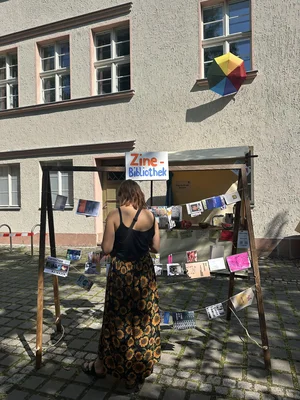
The project workshop was also presented at HIT.

Spending time together is also a key benefit of the project workshop.
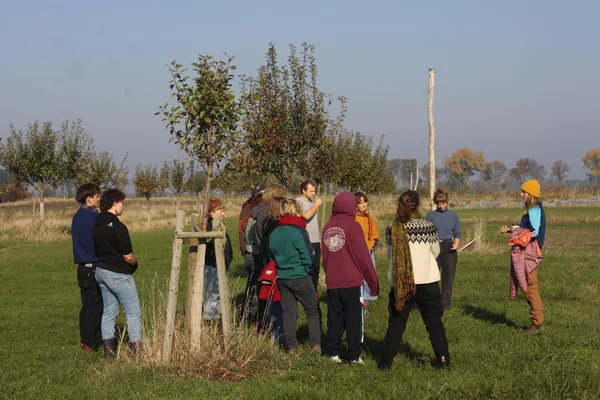
Guided Tour during the Excursion to the SoLaWi Farm Collective Basta in the Oderbruch
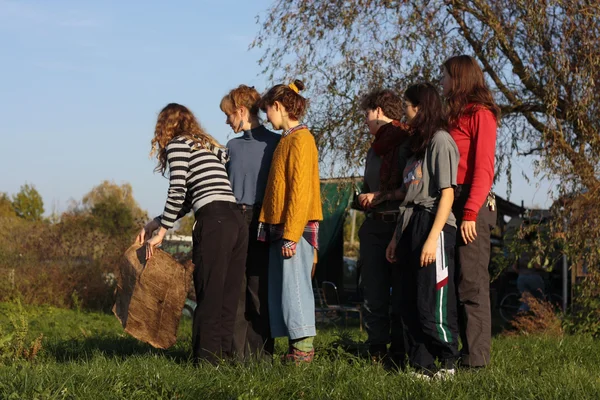
Students practise working together to find a solution through a group game.
What can you expect?
- Interdisciplinary work and exchange with students from other degree programmes
- Practical application and realisation of your own exciting project
- experience joint learning and mutual support in a peer-teaching format
- 6 ECTS credits for Bachelor's and Master's students
The content of the project workshops varies depending on the programme. The current project workshops are Gender and Climate Justice, Experiencing Learning and Shaping Futures and Society. Which project workshops are offered depends on the students leading them.
Gender and climate justice
The project workshop "Gender and climate justice" analyses the link between gender (in)justice and the climate crisis. The aim is to develop an intersectional understanding of power relations and to analyse the interactions between social, ecological and economic dimensions of the climate crisis.
The connection between patriarchal structures, colonial and neo-colonial influences and neoliberal economic models and global injustices will be analysed. Participants are to be empowered as political subjects in order to take responsibility for themselves and society.
The project workshop promotes joint learning through creative and interactive methods, such as the creation of a zine, field trips and interdisciplinary discussions. Social and emotional skills are trained in order to sustainably shape social change processes. The focus is on a critical reflection of power and resource relations, especially in the context of agriculture and Forestry, and the development of alternative perspectives and utopias for a fairer future.

Shaping the future and society
The project workshop "Shaping Futures and Society" offers students the opportunity to deal with future scenarios in order to develop key competences for a VUCA world (volatility, uncertainty, complexity, ambiguity). The focus is on social, technological, economic and ecological transformations, emphasising the designability and diversity of possible futures. The examination of sustainability, supplemented by technological dimensions, forms a central component.
The aims of the project workshop are to promote individual and collective design skills, to reflect on future issues and to develop creative scenarios that combine sustainability and technological innovation. Students work independently on projects, supported by tutors, and use innovative methods such as design futuring and immersive technologies (e.g. virtual reality).
The semester is divided into three phases:
- Input phase, with lectures and field trips,
- project phase, in which students develop their own future scenarios in individual or group work, and
- presentation phase, in which the results are presented and reflected upon.
The project workshop encourages the creative, critical and sustainable design of visions for the future and offers a platform for interdisciplinary exchange and innovative approaches.
Former project workshops
Experience learning
The "Experience Learning" project workshop responds to the challenges of the education system, which often prioritises short-term learning and instead focuses on long-term learning success and self-efficacy. The aim is to promote fun, effectiveness and efficiency in learning by developing and customising innovative approaches.
The workshop combines sustainability and education for sustainable development (ESD) by linking future-orientated learning with social and ecological awareness. It creates a platform for students from different disciplines to jointly develop new learning concepts, deepen their knowledge and develop their personal strengths. The modular structure of the semester, consisting of input, project and reflection phases, enables participants to carry out projects independently, share their experiences and reflect on their progress. Tutors accompany and support the process.
The project workshop is a flexible and recurring programme that allows students to experience learning as a dynamic and enjoyable activity and promotes innovative educational approaches.
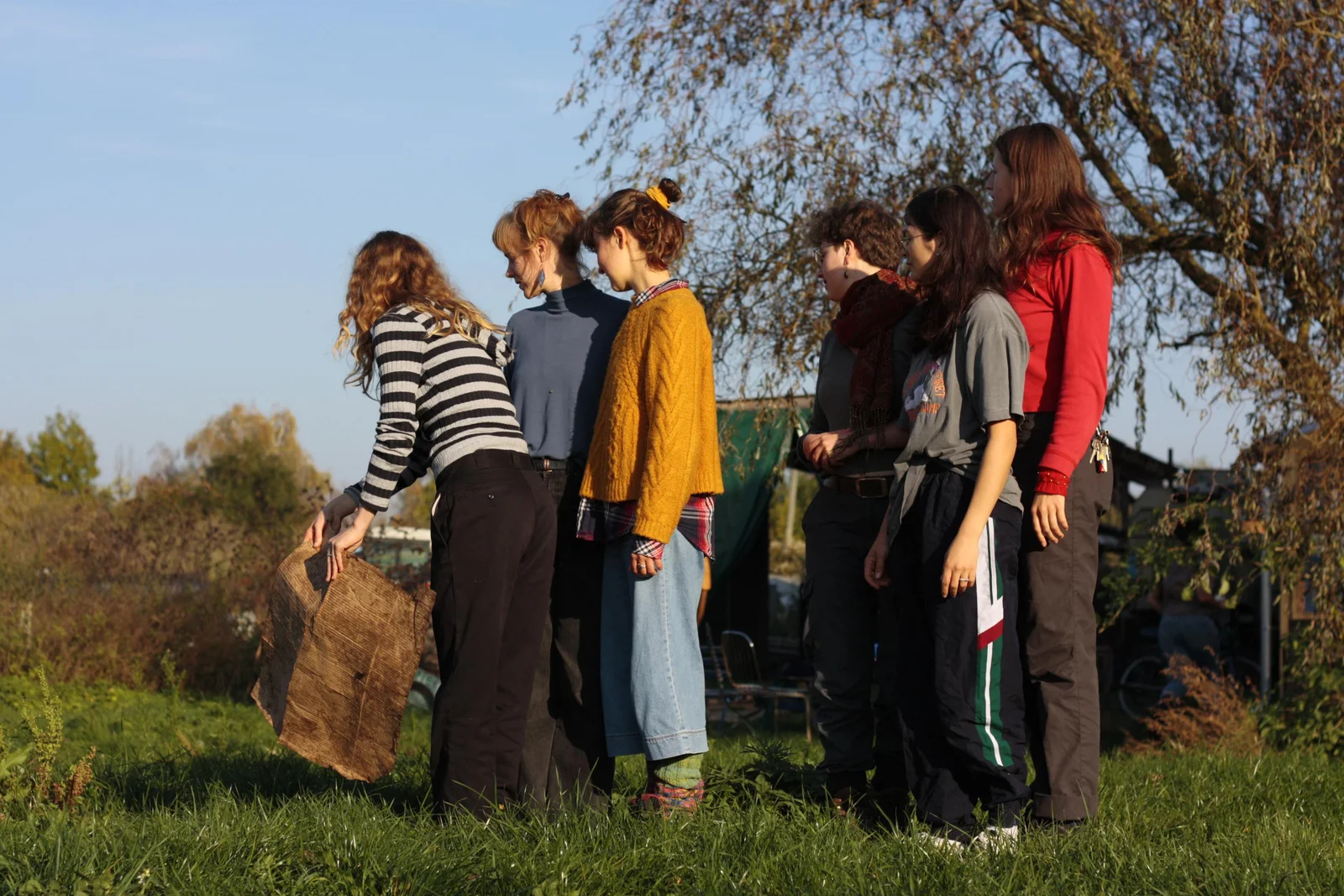
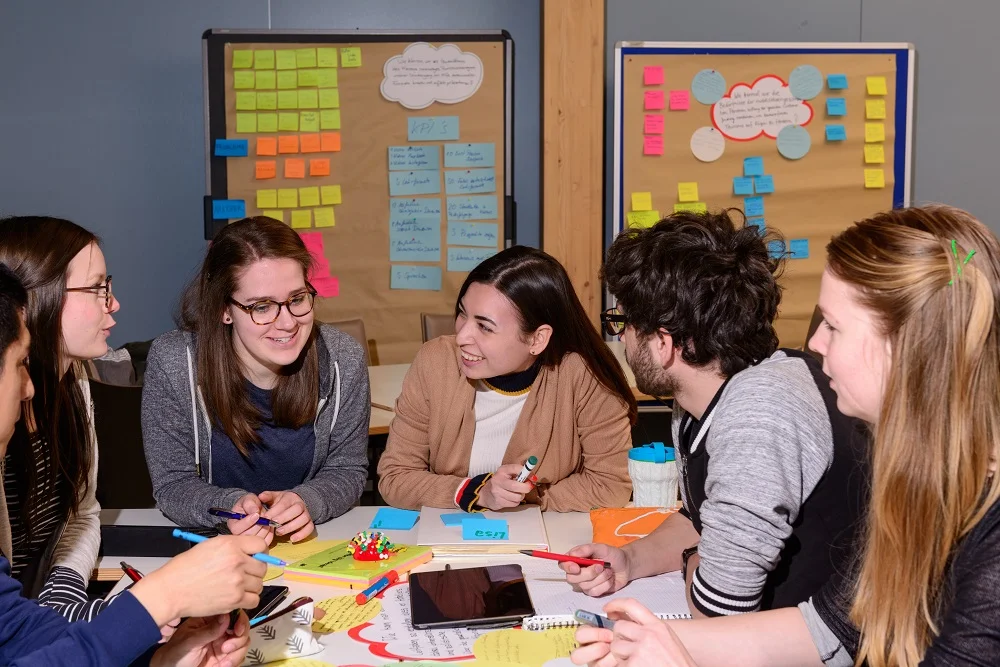
Learning in the project workshop followed the peer-to-peer principle and became a commoning process itself. In addition to content-related knowledge, the focus was on shared experience, reflection and design. Voluntary and self-determined participation encouraged the group's commitment and motivation.
The interdisciplinary composition of the group meant that diverse perspectives could be brought in and the impact of the commons explored together. Findings from the group process had an impact beyond the semester and into everyday university life.
The project workshop did not see itself as a pure transfer of knowledge, but as an open learning space in which practical approaches were also developed. Reflection was a central element, based on theoretical models such as the commoning patterns of Helfrich & Bollier (2019).
A joint kick-off weekend served to set objectives, organise and clarify roles. Over the course of the semester, the participants worked independently on topics, reflected on their ways of thinking and made the results accessible outside of the university, for example through workshops or digital materials. Local collaborations and practical projects rounded off the format.
The result of the project workshop is a picture book for children that explains the topic of commons in simple terms.
The project workshop is currently being continued as the Commons Working Group.